Antarctic ice sheet loss temporarily slows due to remote climate anomalies
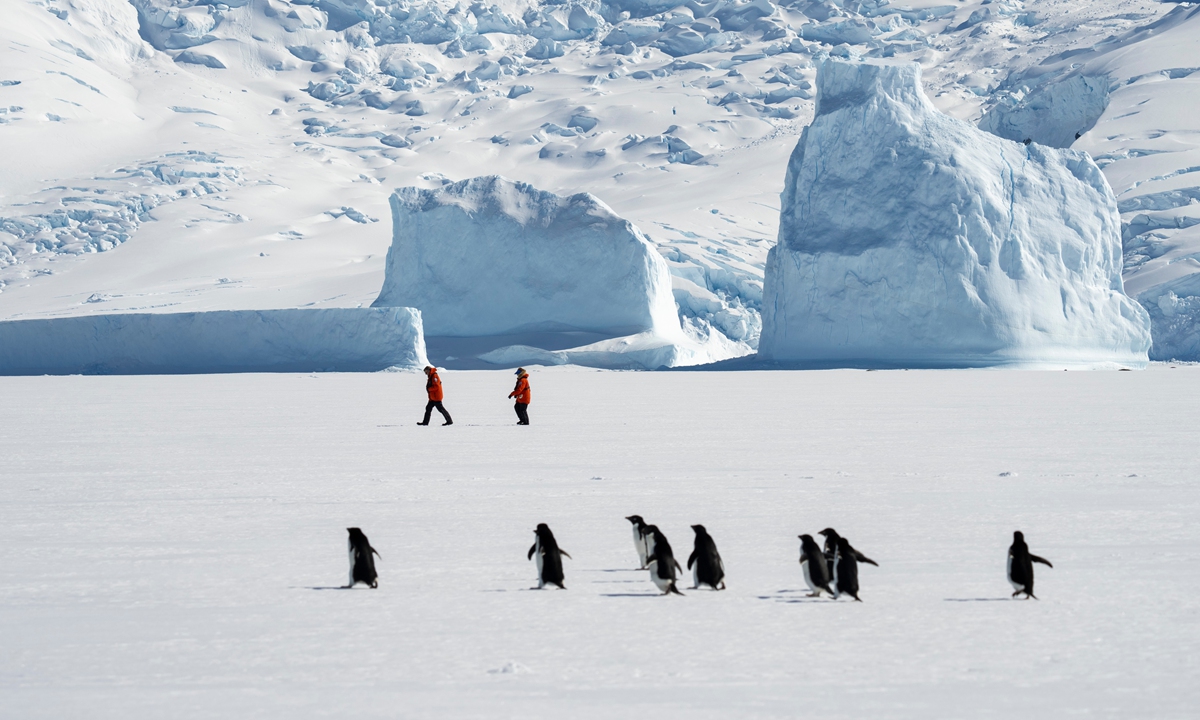
Chinese and international scientists reported that Antarctica’s long-term ice mass loss has temporarily slowed, attributing the change to unusual sea surface temperature anomalies in the remote tropical warm pool. The report also highlighted a satellite-gravimetry finding that Antarctica gained roughly 695 billion tons of ice between July 2021 and April 2023, the largest 22-month mass gain seen in nearly two decades.
More in Science

Blind spots at Antarctic coasts limit sea level projections
An international review published in Reviews of Geophysics says persistent gaps in Antarctic coastal observations are limiting sea-level projections. The story emphasizes missing data on coastal bed topography and sub-ice-shelf cavities, which are crucial for understanding ice loss and future climate impacts.
Antarctica's coastal 'blind spots' limit sea level rise predictions, scientists warn
British Antarctic Survey says a new community-led review warns that major knowledge gaps along Antarctica’s coastline remain one of the biggest obstacles to reliable forecasts of future global sea level rise. The review combines observations, models, and theory to identify missing data on ice-ocean-atmosphere-solid Earth interactions.
New scientific review identifies Antarctic coastal blind spots limiting predictions
This release highlights the same international review of Antarctica’s coastal zone, focusing on how incomplete observations continue to restrict estimates of Antarctic ice loss and sea-level rise. It notes that the paper synthesizes current understanding of ice, ocean, atmosphere, and solid Earth interactions across the continent’s coast.